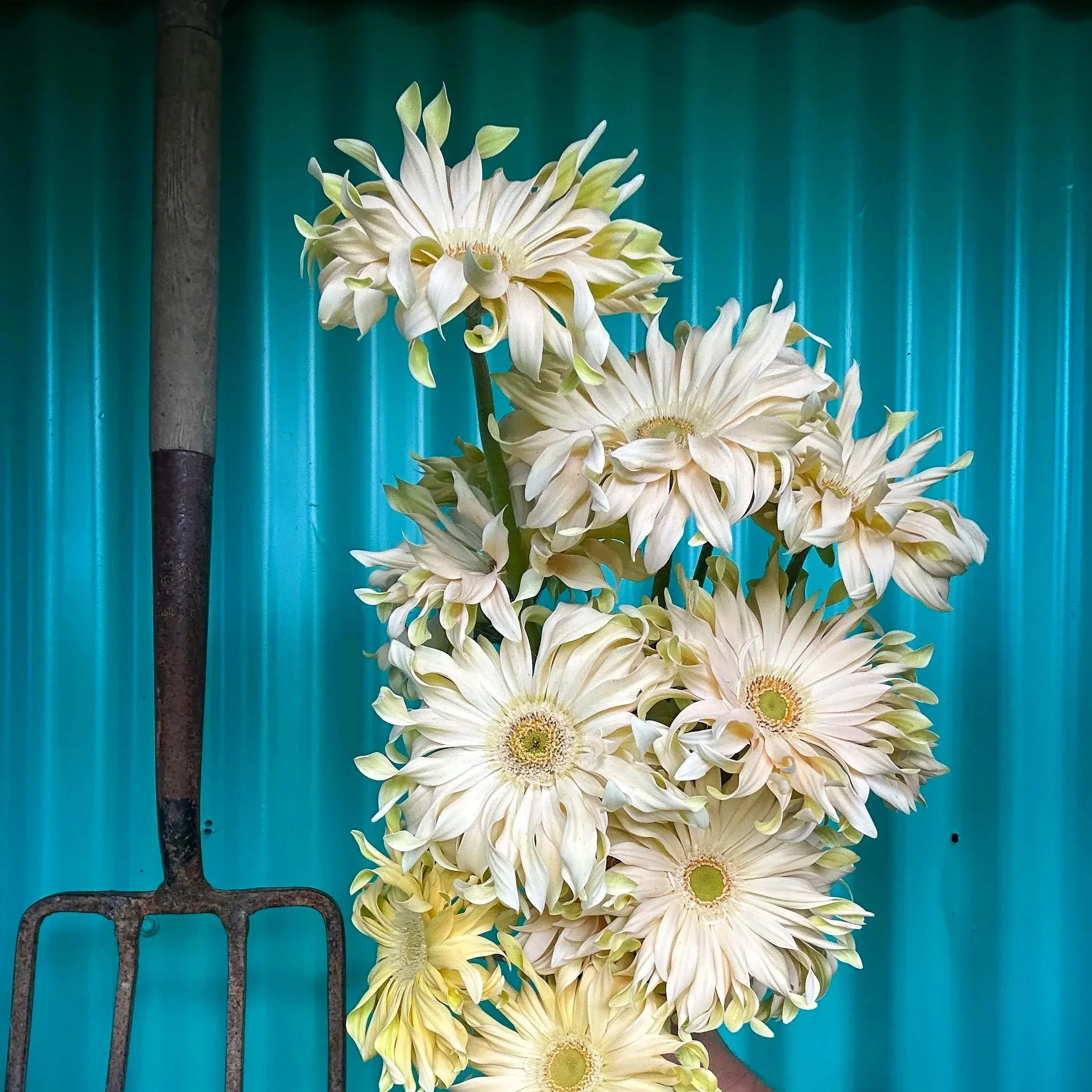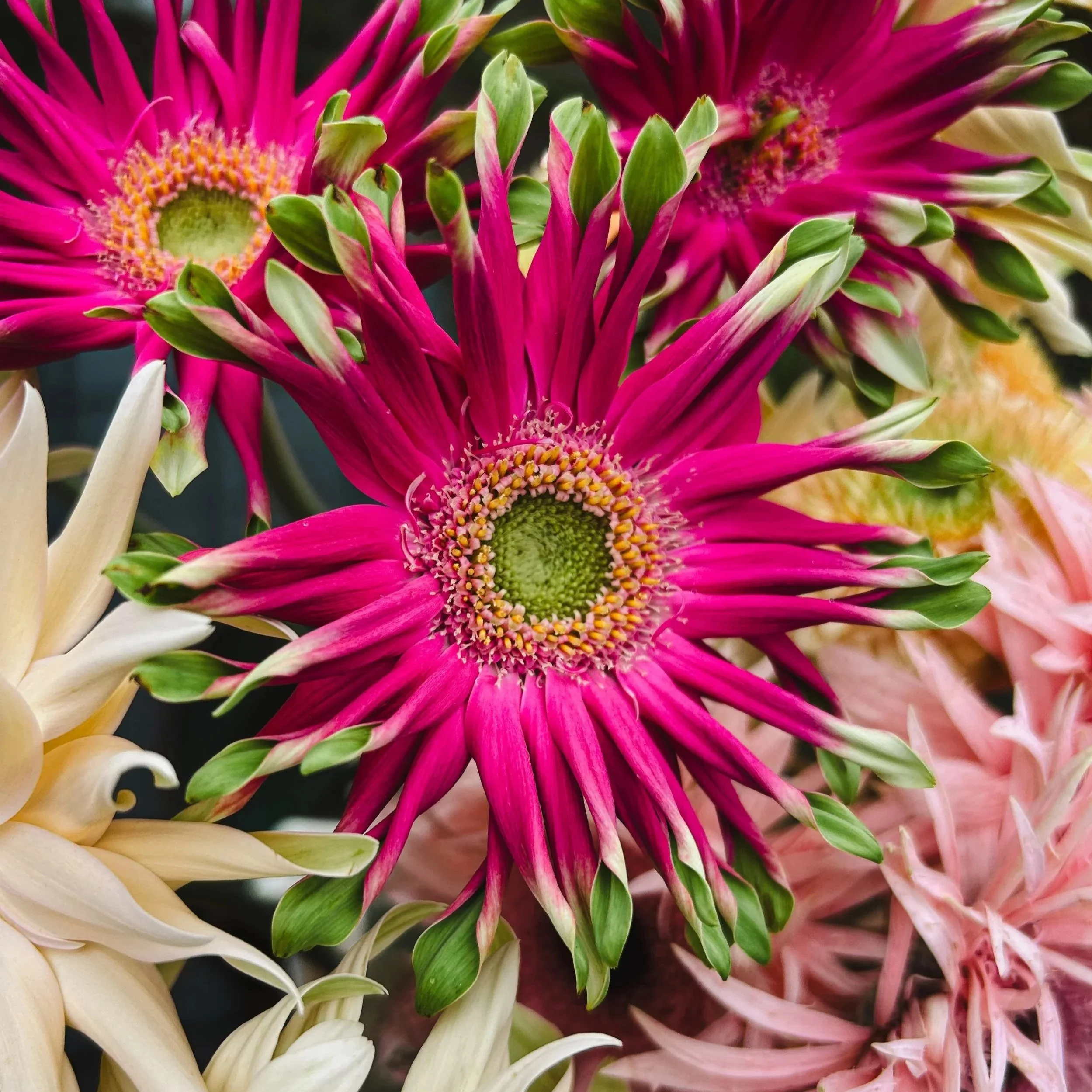
There was a time when the humble gerbera was everywhere.
Usually brightly coloured, perfectly round and standing bolt upright in a cellophane-wrapped bouquet—possibly accompanied by a birthday balloon, a teddy bear and an alarming amount of rainbow tissue paper.
They were cheerful. They were dependable. And, if we’re being completely honest, they became just a little bit… naff.
But flowers, like fashion, have a habit of coming back around—and the gerbera is currently enjoying a rather fabulous renaissance.
A little gerbera history
Gerberas belong to the daisy family, Asteraceae, and their best-known ancestor, Gerbera jamesonii, is native to southern Africa. Also called the Barberton or Transvaal daisy, it was named after German botanist and medical doctor Traugott Gerber, while jamesonii honours Robert Jameson, who collected specimens near Barberton in South Africa in the 1880s. Plants were later sent to Kew Gardens, where they flowered and were illustrated toward the end of that decade. South African National Biodiversity Institute
From these relatively simple wildflowers, generations of careful breeding produced the enormous, brilliantly coloured gerberas that became one of the world’s most recognisable cut flowers.
And therein lay the problem.
How did the gerbera become “naff”?
The gerbera may simply have been a victim of its own success.
Its long stem, strong graphic shape and almost comically cheerful face made it perfect for mass-market bouquets. Before long, gerberas were appearing in every imaginable shade—often all at once—and florists developed a fondness for wiring their stems into submission.
While more romantic, garden-style flowers began stealing the spotlight, the gerbera was quietly relegated to the supermarket bouquet aisle. Lovely, certainly, but perhaps not the first flower one associated with sophisticated floral design.
Until breeders began getting a little weird.
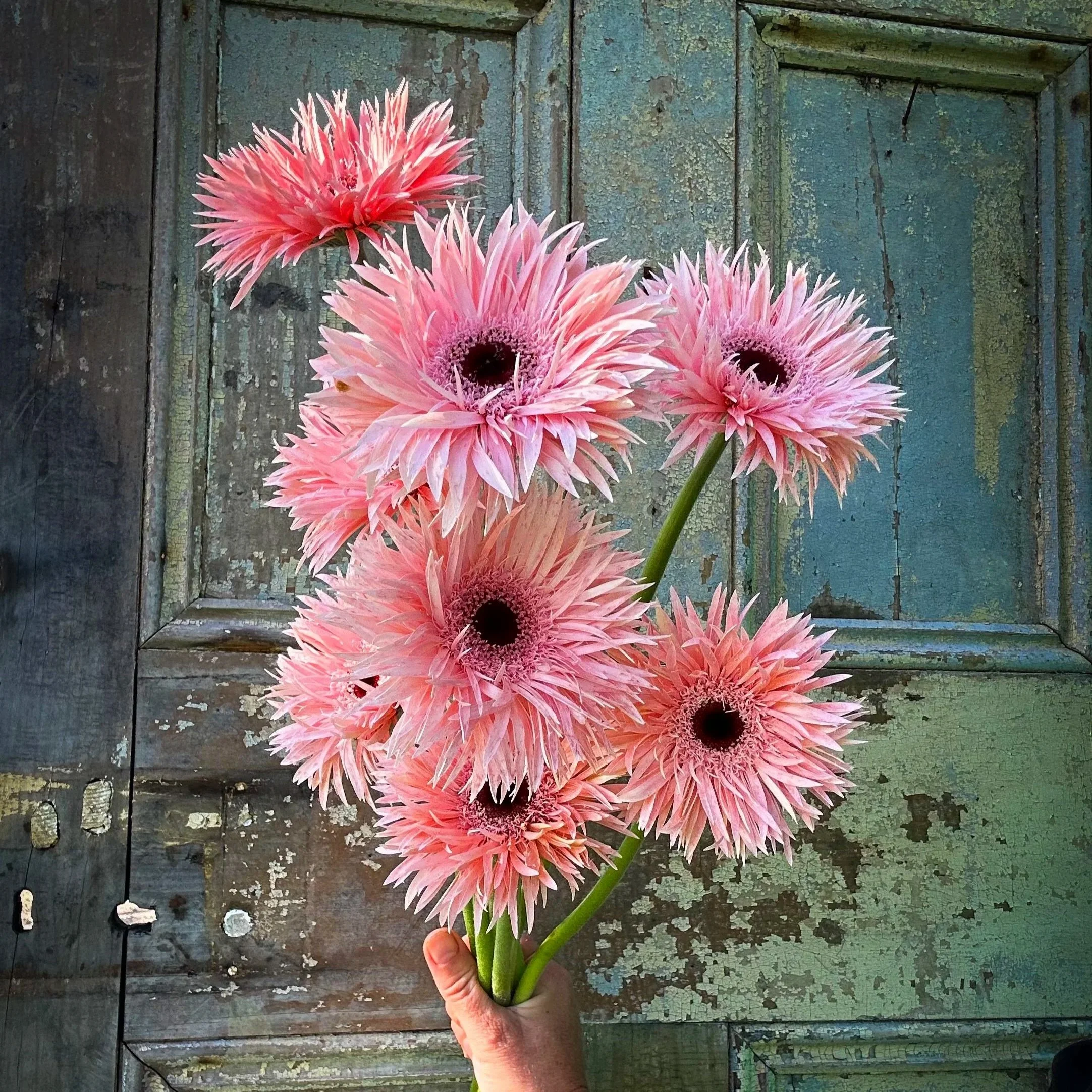
The new gerberas have arrived
Today’s gerberas are an entirely different proposition.
There are shaggy spider varieties with long, narrow petals; plush pompon forms packed with layer upon layer of petals; and wonderfully strange “Pasta” gerberas with curled, twisted petals resembling ribbons—or, indeed, pasta. There are miniature germini and even tiny micro varieties perched on unexpectedly elegant stems. Holex Flower
The colours have changed, too. Alongside the classic brights, we’re now seeing buttery creams, dusty blush, antique peach, burnt orange, terracotta, deep wine, muddy pink and deliciously moody bicolours. Some have dark chocolate centres, others fresh green eyes, and many possess an irregular, slightly unruly quality that makes them feel far more interesting than their perfectly polished predecessors.
They’re graphic without being stiff, playful without being childish and bold without needing an enormous supporting cast.
In contemporary arrangements, gerberas can look beautifully sculptural. A few stems placed at different heights in a simple vessel feel modern and intentional, while masses of one unusual variety create an incredible hit of colour and texture. Their clean stems and expressive faces also work wonderfully in loose, asymmetric designs—especially when paired with branches, grasses, interesting foliage or other unexpected seasonal ingredients.
Basically, the gerbera stopped trying so hard to look perfect—and suddenly became cool.
Keeping your gerberas happy
Gerberas can last for more than a week in a vase with a little care. Their stems are particularly sensitive to bacteria, so begin with a spotlessly clean vase, fresh water and flower food. Recut the stems with a sharp knife or secateurs, refresh the water every few days and keep them away from direct sunlight and heat.
If a stem begins to droop, recutting a small section from the bottom and returning it to fresh water will often help it perk up again. Royal Horticultural Society
So, are gerberas humble? Perhaps.
A little nostalgic? Absolutely.
But boring, predictable or naff? Not anymore.
With their extraordinary new shapes, sophisticated colours and slightly eccentric personalities, gerberas are firmly back on our flower bench—and, somewhat unexpectedly, back on our list of favourites.