There are popular houseplants—and then there is the Phalaenopsis orchid.
You’ll find one poised elegantly on bathroom vanities, kitchen islands, reception desks, hotel counters and in approximately every second homewares catalogue ever printed. Has the Phalaenopsis reached peak popularity? Quite possibly. Do we love it any less? Absolutely not.
A very brief orchid history
Long before it became the unofficial symbol of “I have a very stylish sideboard,” the Phalaenopsis grew high in the warm, humid forests of tropical Asia and northern Australia.
These clever plants are epiphytes, meaning they naturally grow attached to trees without feeding on them—using the branches as a comfortable seat rather than lunch.
The genus was named in 1825 by botanist Carl Ludwig Blume. Its name comes from the Greek words for “moth” and “resembling,” inspired by the elegant blooms appearing like moths in flight. Hence its rather lovely common name: the moth orchid.
Generations of careful cultivation and hybridising eventually transformed this once-exotic botanical treasure into one of the world’s most popular indoor plants. And honestly, it has earned the title. Few plants deliver such wonderfully long-lasting flowers while asking for so little in return. It is essentially a houseplant wearing couture.
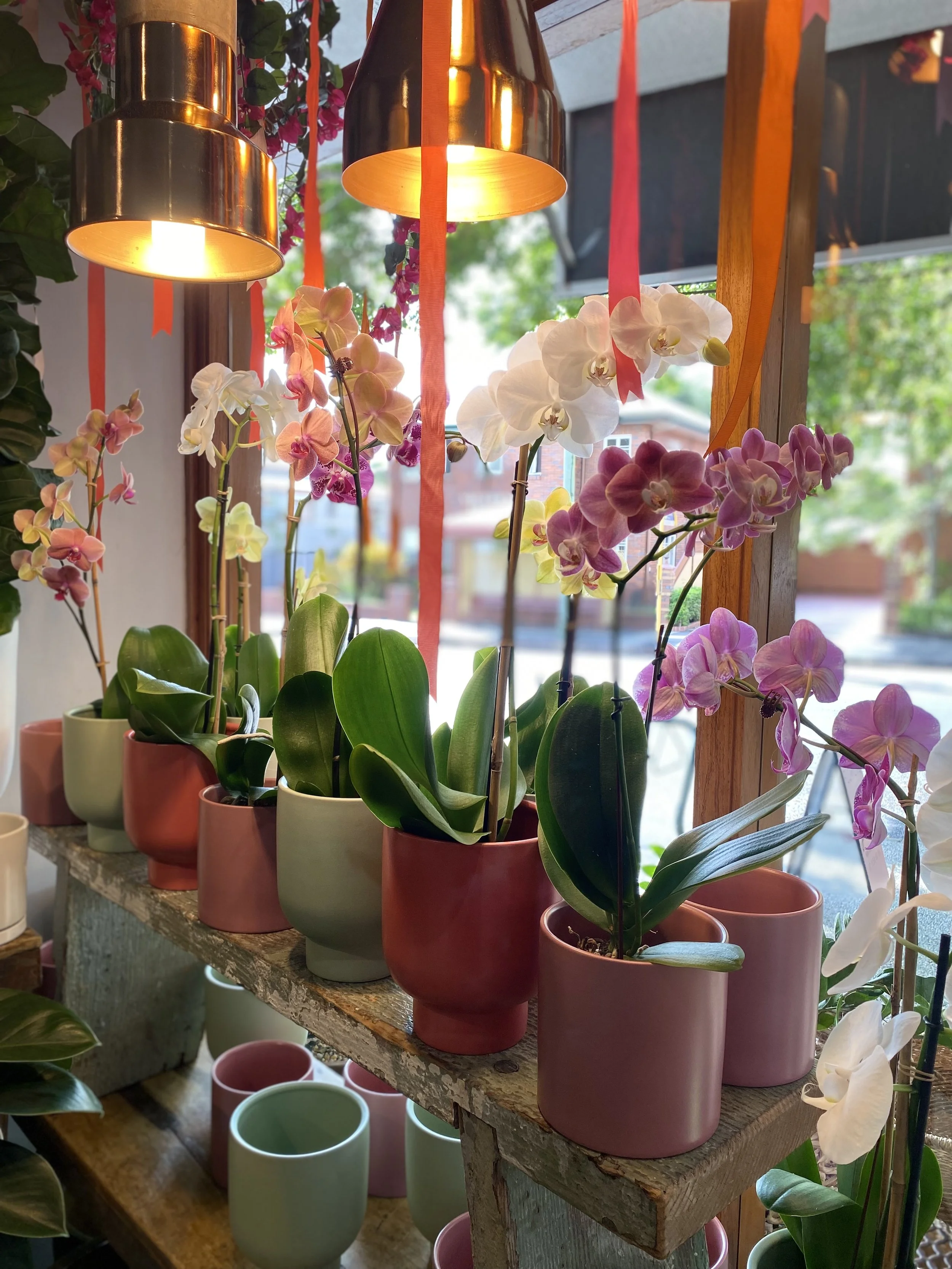
There’s more to life than white orchids
The classic white Phalaenopsis will always be effortlessly elegant—but she’s certainly not an only child.
At Lillipollen, we source our beautiful plants from local Brisbane nursery Formosa Orchids, a family-owned specialist grower established in 1995. Each plant receives around 70 weeks of expert care before making its grand entrance.
Alongside timeless white, their orchids arrive in gorgeous pinks, rich purples, spotted varieties and striking bi-colours. Some are restrained and sophisticated. Others look as though they’ve dressed for cocktails somewhere tropical.
How to keep your orchid happy
Phalaenopsis orchids are refreshingly low maintenance, but a few simple rules will keep them looking fabulous:
Give them bright, indirect light. Avoid harsh direct sun—particularly the full Brisbane afternoon blast.
Water when the bark is nearly dry and the visible roots look silvery. Water thoroughly, allow it to drain completely and never leave the pot sitting in water.
Skip the ice cubes. These are tropical plants, not tiny botanical cocktails.
Keep them away from cold air-conditioning and strong draughts.
Don’t cut off the wandering aerial roots. They may look unruly, but they are perfectly natural and part of the plant’s charm.
Once flowering has finished, trim a healthy green flower spike just above a node to encourage another flush. If the spike has turned completely brown, cut it back near the base.
Elegant, exotic and remarkably forgiving, the Phalaenopsis may be everywhere—but sometimes things become popular simply because they’re very, very good.
